Septic Tank Pumping
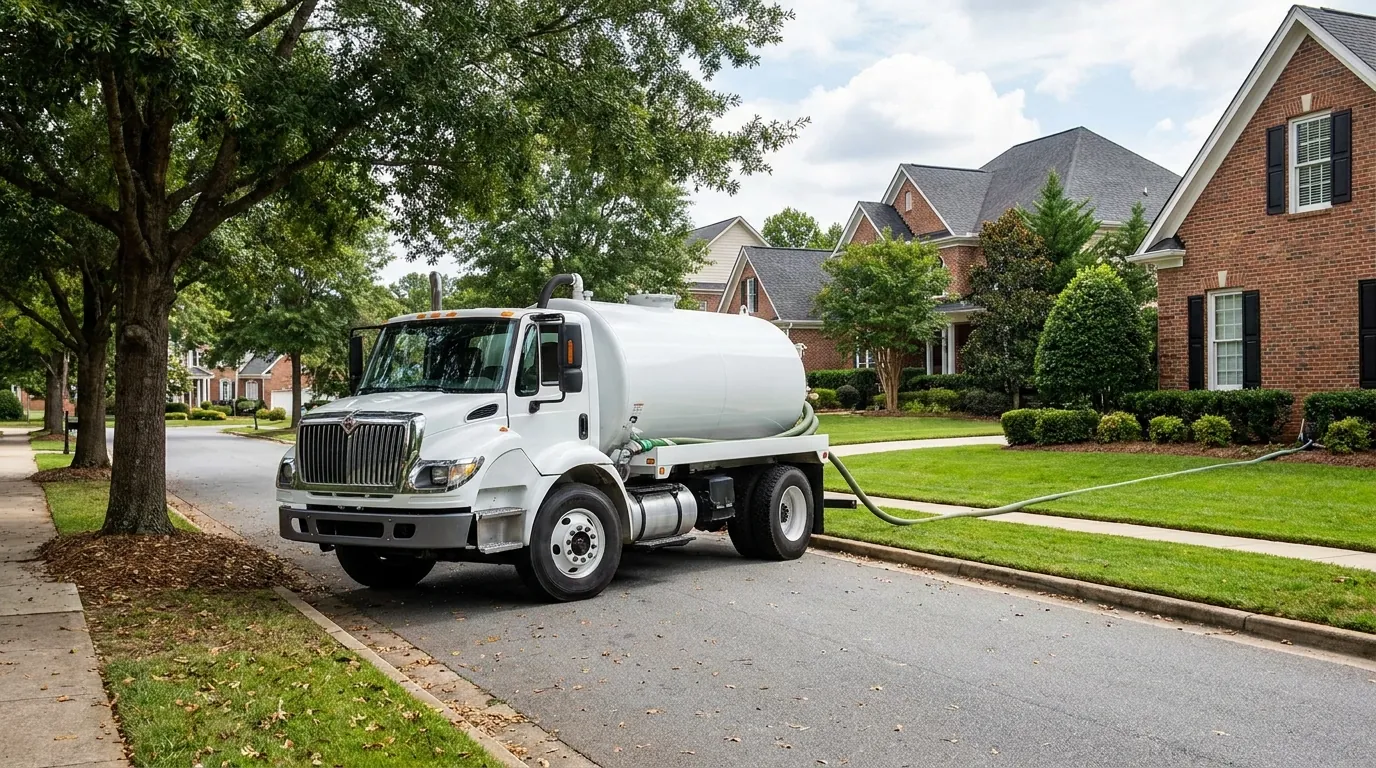
Scheduled pumping to remove sludge and scum before they reach the drain field. The core service for keeping a system healthy in slow-draining clay soil.
Fort Mill Septic Guys
Pumping, cleaning, inspection and drain field help for homes on septic across Fort Mill and York County.
Serving Fort Mill, SC and the surrounding area.
If your Fort Mill home runs on a septic system, everything that goes down the drain ends up in a tank buried in your yard — and that tank needs regular attention to keep working. Fort Mill Septic Guys focuses on the routine work that keeps a system healthy: pumping the tank on schedule, cleaning out the solids and scum, inspecting the parts you can't see, and stepping in when something backs up. We work with homeowners across Fort Mill, SC and the surrounding towns of York and Lancaster counties.
The soil under most of this area is heavy red clay, and that single fact changes how septic systems behave here. Clay drains slowly. Water that would soak quickly into sandy soil lingers around the drain field, and during our humid summers and heavy seasonal rain the ground can stay saturated for days. A tank that is overdue for pumping, or a drain field already working hard against wet clay, will show trouble faster in Fort Mill than it might somewhere with looser, better-draining soil.
That is why we treat pumping frequency as a local decision, not a one-size-fits-all rule. Tank size, how many people live in the house, how much water you use, and how well your drain field is coping all factor in. Our job is to look at your actual system, tell you what we find in plain language, and give you a straight recommendation — whether that's septic tank pumping now, an inspection to check on a slow drain, or simply a note to come back in a couple of years.
The upstate clay around Fort Mill holds water. When a septic tank is pumped, the wastewater that leaves it flows into the drain field, where it is supposed to seep down through the soil. In sandy ground that happens quickly. In clay it happens slowly, so the drain field has less margin for error — a tank that's allowed to overfill pushes solids into those lines, and solids in clay do not clear on their own. That is the most common way a Fort Mill septic system fails early.
Our weather makes it harder. Humid summers keep the ground damp, and the region gets bursts of heavy seasonal rain that can saturate a yard fast. When the surrounding soil is already full of water, your drain field has nowhere to send its own outflow, and you may see slow drains, gurgling, or wet patches in the yard even if the tank itself isn't full. Knowing the difference between a tank problem and a saturated-ground problem is a big part of what a good inspection sorts out.
Because of all this, homes on shallow lots or near low, wet ground often benefit from more frequent pumping than the standard advice suggests. If you've noticed slow fixtures during a rainy stretch, our article on septic care during heavy rain walks through what to watch for, and our guide to how often to pump a septic tank explains how local conditions shorten the interval.
Full septic care for homes and small properties across the Fort Mill area.
Scheduled pumping to remove sludge and scum before they reach the drain field. The core service for keeping a system healthy in slow-draining clay soil.
A look at tank levels, baffles, and how the drain field is handling flow — useful before buying a home or when something seems off.
A more thorough clear-out than a routine pump, removing built-up solids and residue so the tank starts fresh.
Help for the part of the system that struggles most in wet clay — from diagnosing soggy spots to addressing slow drainage.
Pumping and cleaning for grease traps at homes with heavy kitchen use and small commercial kitchens.
Response for backups, overflows, and sewage odors that can't wait — especially common after heavy rain.
We serve Fort Mill and the surrounding towns of York and Lancaster counties.
Most households land in the three-to-five-year range, but the clay soils around Fort Mill and heavy seasonal rain can push that interval shorter. Tank size and how many people live in the home matter too. We can look at your system and give you a specific recommendation.
Common signs include slow drains throughout the house, gurgling toilets, sewage odors indoors or over the tank, and wet or unusually green patches in the yard above the drain field. Any of these are worth checking before they turn into a backup.
Yes. Backups and overflows often happen after heavy rain when the ground is already saturated. Our septic emergency service exists for exactly those situations that can't wait for a scheduled appointment.
Cost depends on tank size, how much buildup has to be removed, and access to the lid. We don't post a flat price because those factors vary, but our article on septic tank pumping cost in Fort Mill explains what drives the number.
We serve Fort Mill along with Rock Hill, Newport, Lake Wylie, Catawba, Van Wyck, and York. If you're just outside those areas, call and we'll let you know if we can reach you.
Tell us your address and roughly when your tank was last pumped, and we'll help you figure out whether it's time. Call to schedule septic tank pumping in Fort Mill or any of the nearby towns we serve.
Serving Fort Mill, Rock Hill, Lake Wylie, York and surrounding areas.
Practical answers to the questions we hear most in Fort Mill, SC.
What drives septic tank pumping cost in Fort Mill, SC, and how to budget for it. Local factors, tank size, access, and how to avoid surprise charges.
A practical guide to how often to pump a septic tank in Fort Mill, SC, and how household size, tank size, and clay soil change your schedule.
Learn the warning signs of a full septic tank in Fort Mill, SC, from slow drains to soggy yards, and what to do before it backs up into your home.